

Pay down your mortgage and build wealth at the same time with debt recycling

Stop choosing between the mortgage and investing.
Most strong earners feel stuck with the same question: do I pour everything into paying off the mortgage, or do I start investing? It feels like one or the other.
Here's the thing. Every year you spend just chipping away at the home loan is a year of investment growth you never get back. And your home loan interest? It's not tax-deductible, so it gives you nothing in return. It's the least efficient debt you'll ever hold.
Debt recycling is how you stop choosing. Done properly, the same income pays down your mortgage and builds an investment portfolio, while cutting your tax along the way.
Pay less tax
Your investment loan interest is tax-deductible. Your home loan isn't. Debt recycling converts bad debt into good debt.

Pay down the mortgage
Investment income and your tax savings go straight onto the home loan, year after year.

Build long-term wealth
While the mortgage shrinks, a diversified investment portfolio grows alongside it.

For debt recycling to work, you generally need:
A regular, secure income
At least 20% equity in your home
A willingness to build and hold an investment loan
Tolerance for short-term ups and downs in investment value
Income protection in place
Debt recycling is not the right fit if...
You are stretched financially
Have consumer debt to clear first
Are risk-averse
Are nearing retirement

- 1 Borrow against your equityWe set up an investment loan using the equity in your home as security.
- 2 Invest the fundsThat borrowed money goes into income-producing investments, like a diversified managed fund.
- 3 Pay down the home loanThe investment income, plus the tax savings it creates, go straight onto your non-deductible home loan.
- 4 Redraw and reinvestYou then borrow back that same amount on your investment loan and reinvest it.
- 5 RepeatYear after year, until your deductible investment debt has quietly replaced your non-deductible home loan entirely.
The debt stays roughly the same size. But move by move, it shifts from working against you to working for you.
Investment loan interest is tax-deductible, so the real rate you pay is lower than the bank's sticker rate.
A 6.25% loan, for someone on the top marginal tax rate, actually costs about 3.44% after tax. That gap is part of what powers the strategy.
Illustrative only. Based on a 45% marginal tax rate and a 6.25% investment loan rate. Not an estimate of returns, fees or costs. General information, not personal advice.
Debt recycling in action
John and Alana owe $300,000 on a home worth around $900,000. They know that by the time they've paid off the loan the slow way, they'll have missed years of potential market growth.
So they put a debt recycling strategy in place. They borrow $100,000 against the home as an interest-only investment loan and invests it in a managed fund earning income and growth.
After year one:
The investment generates $3,000 of income, plus $900 in franking credits
The loan interest creates a $6,250 tax deduction
Their tax bill drops by $1,805
They put $4,805 (the investment income plus the tax saving) straight onto the home loan
Combined with regular repayments, their home loan principal falls by $8,320 for the year
That $8,320 is then borrowed back through the investment loan and reinvested, growing the portfolio further

Same income. Mortgage down, investments up, tax down. Then it repeats.
John and Alana (illustrative only). This scenario is fictional and illustrative only. It's not an estimate of the returns you'll receive or the fees and costs you'll incur.
Our approach
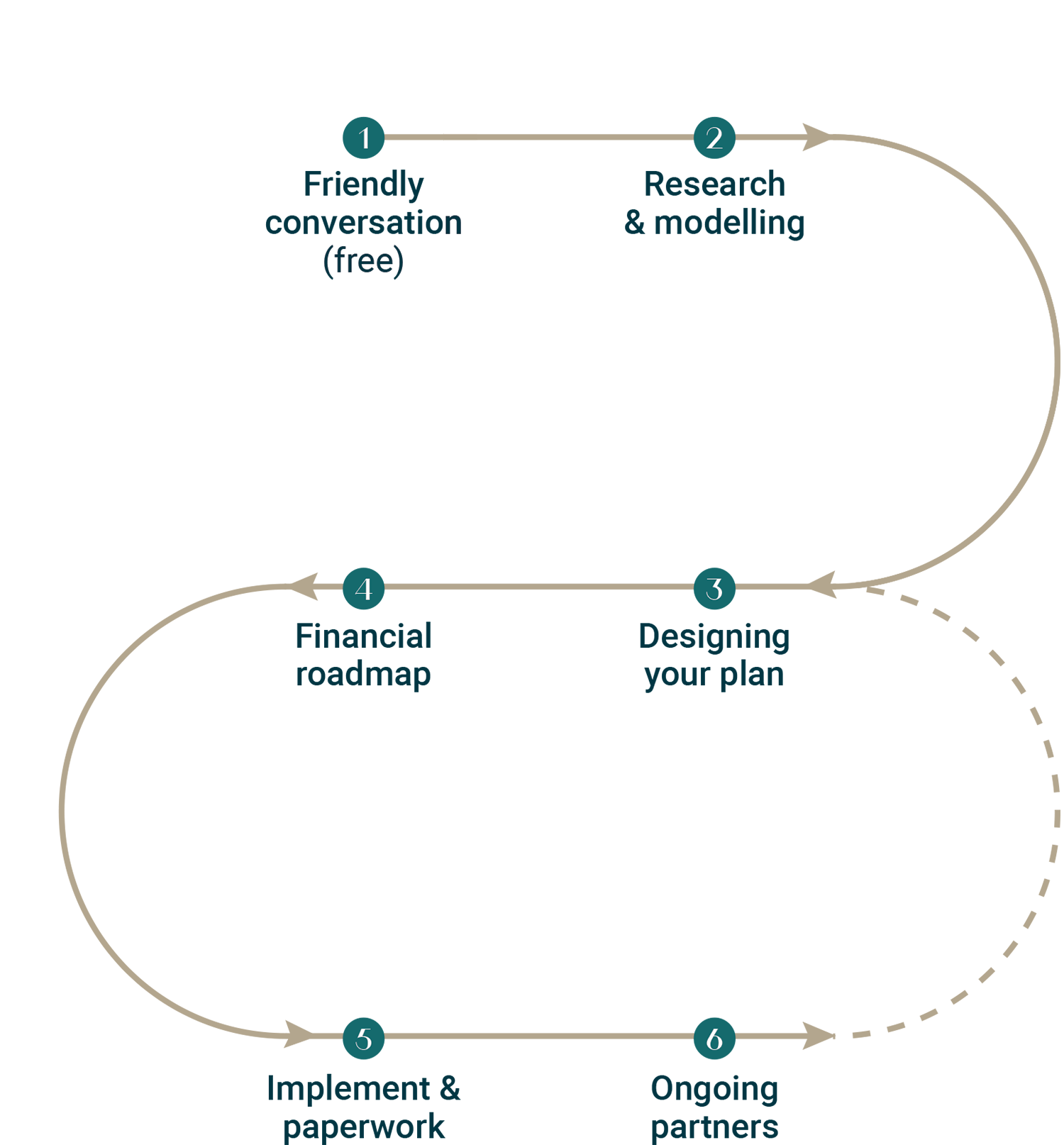
We don't rush decisions. We model the numbers. We help you move forward with confidence.
-
We get to know your income, your home loan, your goals and your appetite for risk, and work out whether debt recycling is even the right fit.
-
Our team runs the numbers on your actual situation. We model how the strategy would play out for you, including the tax position, the cashflow and the risk.
-
We build the strategy around your circumstances: how much to borrow, what to invest in, and how the loans are structured to keep it clean and compliant.
-
We walk you through the plan in plain English, showing you the trade-offs and the numbers, so you understand exactly why we're recommending it.
-
We handle the loan structuring, the investment setup and the paperwork, and coordinate with your lender so everything is done correctly from day one.
-
Debt recycling is a multi-year strategy. We review it with you regularly, manage the annual cycle, and adjust as your income, the markets and the tax rules change.
Meet Your Debt Recycling Specialist
Kyrillos is a problem-solver at heart who loves helping clients turn what feels like a complex financial puzzle into a clear strategy. By combining lending expertise with financial advice, he helps clients use debt recycling and other wealth-building strategies to create better options for the future.
He'll help you understand the opportunities, risks and mechanics of debt recycling, so you can make confident decisions and keep moving towards financial freedom.

Ready to make your mortgage work?
The sooner you start, the more years the strategy has to compound. Let's run the numbers on your situation and see what's possible.